Scaled-Key Pictographs: Don't Forget The Key
One little line under the pictograph decides the whole question. Miss it and a right method still gives a wrong answer.
- One picture rarely means one thing. The key underneath says what each symbol is worth.
- Count the symbols, then multiply by the key. The symbol count is never the final answer.
- Half a symbol is worth half the key. Half an apple on a key of 4 means 2.
- On 'how many more' questions, scale each side first, then subtract. Never subtract the pictures.
Picture a child racing through the data-handling section. The pictograph shows apples sold each day, they count the little apples, jot the number down, and move on. Fast, sure of themselves, and wrong. The one thing they skipped was the tiny line printed underneath, and that line had quietly decided the whole question.
Read The Little Line First
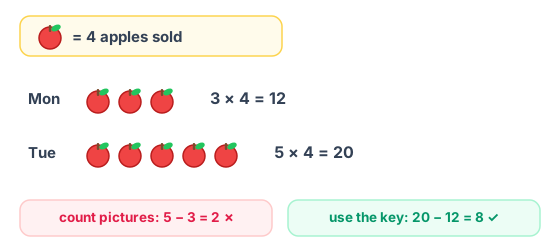
That line is the key, and it tells you what a single picture is actually worth. One apple might stand for four apples sold, which makes every symbol worth four and half a symbol worth two. So the habit is almost boringly simple: before counting a single picture, read the key, count the symbols, then multiply. The number of pictures is a step on the way, never the number you hand in.
Where It Does The Most Damage
The questions that punish a forgotten key are the "how many more" ones. Say each apple is worth four, Monday shows three apples and Tuesday shows five. The picture almost dares the child to answer two, the gap in symbols. But Tuesday is five fours, which is twenty, and Monday is three fours, which is twelve, so the real gap is eight. Scale each side first, then compare. Skip that and a flawless subtraction still lands on the wrong number.
None of this is hard once the key becomes the first thing your child looks at instead of the last. That is the whole reason our data-handling questions never describe a pictograph in words. They show the real one, key and all, so reading it first becomes second nature.
Understanding first. Confidence next.
We teach every topic until it makes sense, then let your child practise it until it sticks. Start with a free diagnostic to see where they stand today.